
Roanoke River Flood Insurance: What Plymouth Buyers Face


In this post
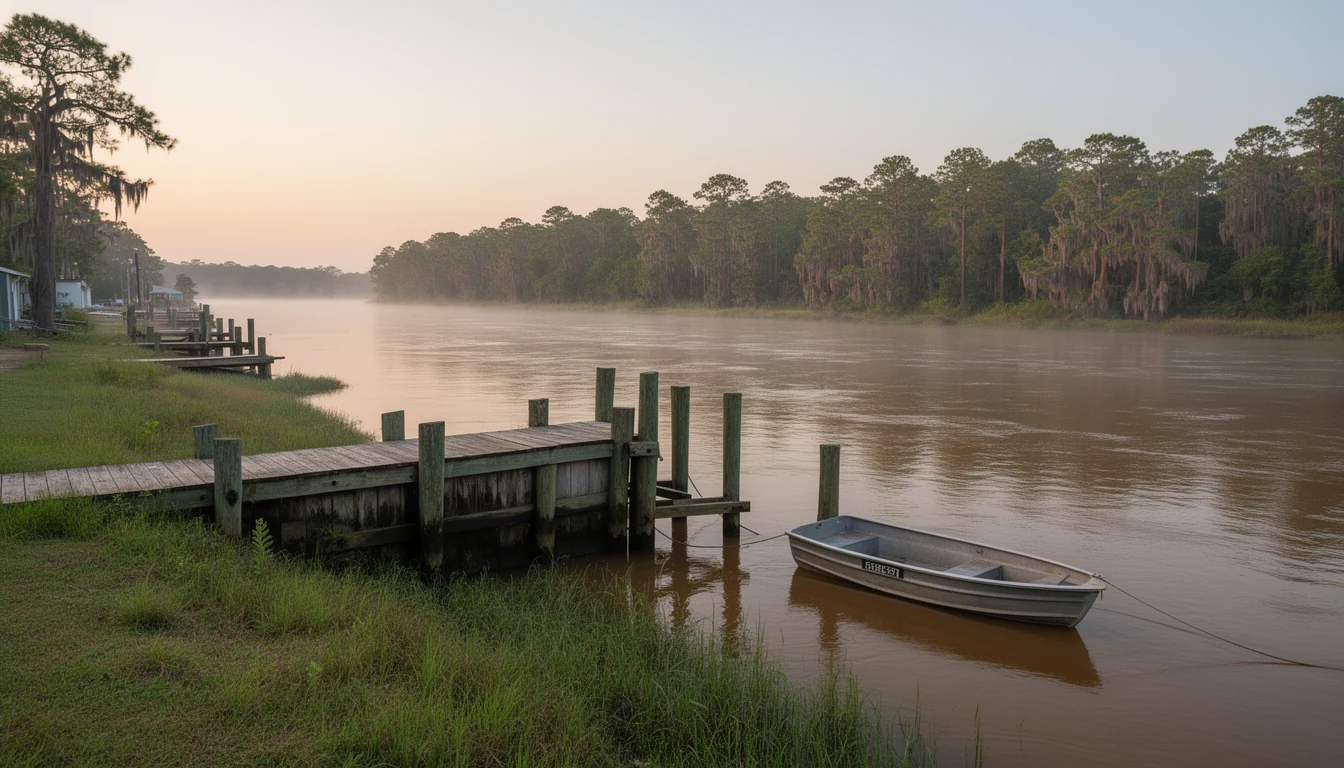
You can see the flood math from the boat ramp at the foot of Water Street. The Roanoke slides past Plymouth wide and brown and slow, and on a calm August afternoon it’s hard to picture it anywhere else. But this river is the single biggest due-diligence item on a Plymouth purchase, and the listing photo will never show it. Flood insurance on the Roanoke isn’t optional for most buyers, and the only real number is a quote for the specific address.
How does flooding actually work on the Roanoke?
Plymouth sits on the last stretch of the Roanoke, roughly seven miles upstream of where the river empties into Albemarle Sound. That position matters, because flood risk here is not one thing. It’s three:
- Wind tide. The sound has no meaningful lunar tide. A sustained blow out of the east or northeast pushes sound water back up the river and its tributaries, and water levels in Plymouth can rise without a drop of local rain.
- Dam-controlled flow. Flooding on the lower Roanoke no longer follows a natural seasonal pattern. Releases from upstream reservoirs, chiefly John H. Kerr Dam operated by the Army Corps, set the river you get in any given week.
- Storm surge. Hurricanes are the compound event. Hurricane Isabel in 2003 pushed surge over the town’s riverside pumping stations, with gusts reported near 95 miles an hour more than fifty miles inland. Hurricane Irene in 2011 did it again.
What does your FEMA zone mean for your loan?
Every mapped property sits in a FEMA flood zone. Here is the shorthand you will see on a Plymouth parcel:
- Zone X means outside the mapped high-risk area. Unshaded X is minimal risk; shaded X is moderate.
- Zone AE is the 1%-annual-chance floodplain with a published base flood elevation. That is the classic “100-year” zone, and the one that matters most along the river.
- Zone VE adds wave action to the picture, the coastal high-hazard designation.
If the house sits in a Special Flood Hazard Area, which covers the A and V zones, and you use a federally backed loan, flood insurance is a lender requirement, not a choice. That covers most conventional, FHA, VA, and USDA mortgages, which is nearly everyone buying in Washington County.
Why is the premium different on every house?
FEMA’s Risk Rating 2.0 changed the pricing math. Premiums are now set per property using distance to water, elevation, foundation type, and rebuild cost. Two houses on the same street can carry very different numbers, so nobody, including me, can quote you a premium from a listing. Only a quote for the actual address gives you a real number.
Get that quote before you write the offer, not during due diligence. If the premium reshapes your monthly payment, you want to know while you are deciding what to offer, not after you have paid a due diligence fee.

How do you check a parcel for free?
Two free tools cover the map side. FEMA’s Flood Map Service Center at msc.fema.gov is the federal source, searchable by address. North Carolina’s Flood Risk Information System at fris.nc.gov layers state mapping on top and is often easier to read for a specific parcel. Pull both for the exact address, not the street and not the neighborhood, because flood zone boundaries run through lots.
Then ask the seller, in writing, about flood history and prior claims, and ask whether an elevation certificate exists. That document can materially change the insurance math.
The Bottom Line
Here is the honest trade-off. Real riverfront on the Roanoke is why people look at Plymouth in the first place, and a flood insurance premium is part of the price of that life. The buyers who get hurt are the ones who skipped the quote and learned the cost after the contract. Price the risk first, and the river is still a bargain: get the flood insurance number before the offer, and a riverfront house in Plymouth can still be the best water deal you’ll find in this part of the state.
Reach out if you have questions. Happy reading!
Keep reading
10 Questions Before Buying Riverfront on the Roanoke
Ten questions to settle before you buy Roanoke River frontage near Plymouth, NC: flood zone, elevation certificate, dock permits, septic, and insurance.
Washington County's Seat: Why Plymouth, Not Roper
How Washington County, NC got its shape: the 1799 split from Tyrrell, the county seat's move off Lee's Mill, and what the lines mean for buyers today.
7 Drive-Time Checks Before Buying in Plymouth, NC
Seven drives that decide what living in Plymouth costs you in road time, with every mile and minute routed on real roads in Washington County.