
10 Questions Before Buying Riverfront on the Roanoke

In this post
- The land and the water
- 1. Where does the property line actually stop?
- 2. What flood zone is on this exact parcel?
- 3. Is there an elevation certificate, and what does it say?
- 4. What does a quote for this address actually say?
- The shoreline file
- 5. Has the bulkhead been permitted, and who says it is holding?
- 6. Who can build or repair the dock?
- The systems under the house
- 7. Where does the septic system sit, and is there a repair area?
- 8. What was in the last well test?
- Access and insurance
- 9. How do you actually get on the water?
- 10. Who will insure the house, and at what?
- The paperwork to ask for first
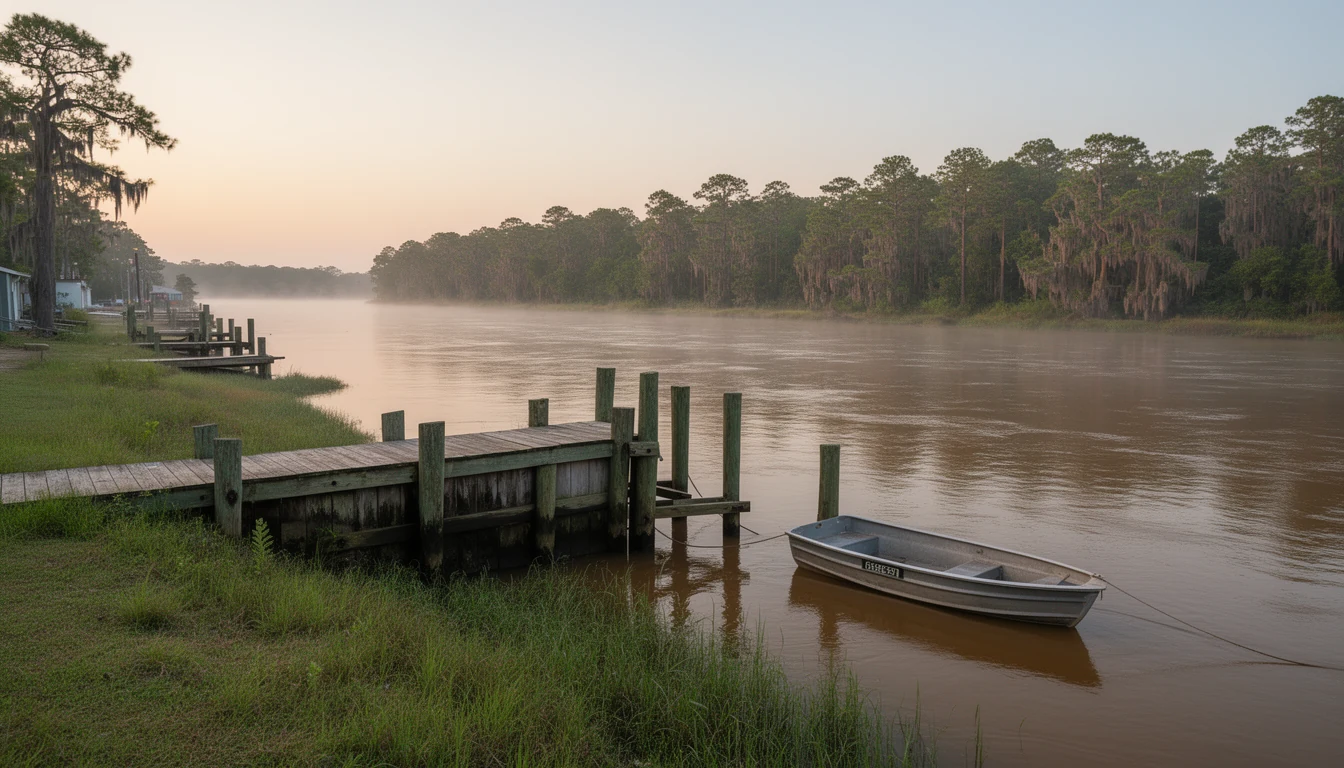
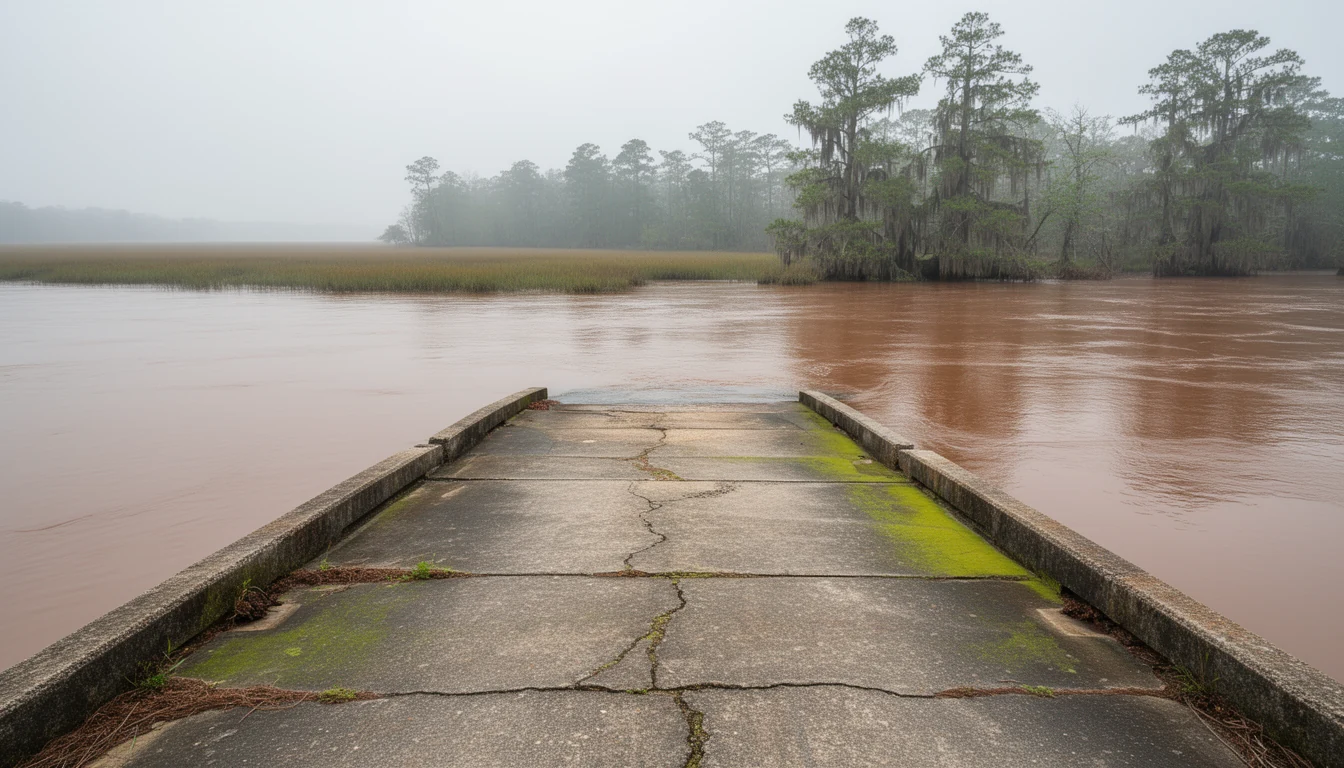
At the Water Street Landing ramp on an October morning, a truck backs an empty trailer down the concrete. A crab boat works the channel, and the Roanoke runs wide and brown toward Albemarle Sound. Plymouth looks simple from here. Buying the ground under it is not.
Riverfront purchases in this town tend to fail on paperwork, not on views. The listing shows the water. The file decides what the water costs you. These are the ten questions I would want answered before a due diligence fee leaves a buyer’s account, in the order that saves the most money.
The land and the water
1. Where does the property line actually stop?
Most riverfront deeds here are old, and many are written in metes and bounds: a call to a gum tree, then a stake, then the bank of the Roanoke. Banks move. Trees die.
Get the deed and a current survey before you assume the grass down to the water is yours. In North Carolina, the bed of a navigable river is held by the state, and a riverfront owner generally holds to the bank. That line decides where a dock can legally go, and it decides whether the parcel next door has any frontage at all.
2. What flood zone is on this exact parcel?
Pull the address at msc.fema.gov, then check it again at fris.nc.gov, the state’s Flood Risk Information System. Zone AE is the 1 percent annual chance floodplain with a published base flood elevation. Zone VE adds wave action to the picture.
Flood boundaries cut through lots. The zone on the neighbor’s house proves nothing about yours, and a listing that says “high ground” is not a map. Print both maps and keep them in the file.
3. Is there an elevation certificate, and what does it say?
An elevation certificate records the lowest floor of the structure against the base flood elevation. It is the document an insurance agent prices from, and the answer can move a premium by more than the county tax bill.
Ask the seller in writing whether one exists. Ask the county as well. If the answer is no, every quote you get until someone measures will be an estimate built on assumptions.
4. What does a quote for this address actually say?
Since FEMA’s Risk Rating 2.0 took effect, flood insurance is priced per property. Distance to water and elevation matter. So do foundation type and rebuild cost. Two houses on the same street can carry very different premiums.
If the house sits in a Special Flood Hazard Area and the loan is federally backed, insurance is a lender requirement, not a choice. Get the real quote for the real address before the offer, while the premium can still shape what you are willing to pay.
The shoreline file
5. Has the bulkhead been permitted, and who says it is holding?
Washington County is one of North Carolina’s 20 CAMA counties. Shoreline work falls under the Coastal Area Management Act and the Division of Coastal Management, and a bulkhead or a replaced dock generally needs a CAMA permit. So does a revetment. Ask for the permit records on anything built, rebuilt, or repaired.
Then look at the wall. Leaning panels and soil disappearing behind the joints mean the wall is losing fill. Scour at the base means the river is taking it. A general home inspector usually will not wade into marine structures, so bring someone who will.
6. Who can build or repair the dock?
Same permit stack, plus a line that surprises buyers. A pier crosses public trust water. You use it under a permit, but the water and the bottom beneath it are not yours, and a repair or replacement may need its own approval.
Find out what a rebuild would require while walking away is still an option. A dock that cannot be permitted back is a dock you own once.
The systems under the house
7. Where does the septic system sit, and is there a repair area?
Riverfront lots here are flat with a high water table, and many of the houses went up before anyone thought hard about drain fields near a river. Ask the county health department for the permit history: the improvement permit, the construction authorization, the operation permit.
Then ask the question that matters. If this system fails, where does the replacement field go? On a narrow lot between the house and the bank, the honest answer is sometimes that there is nowhere. That conversation belongs before the offer, not after the inspection.
8. What was in the last well test?
Any private well drilled in North Carolina since July 1, 2008 was permitted and inspected by the local health department, then tested before it became a drinking water source. Older wells were not.
The state recommends testing an existing well for coliform bacteria every year, and for nitrates, lead, copper, and heavy metals every two years. On a river parcel, add a second reason: floodwater over a wellhead is a contamination event. If the casing is shallow or the ground around it ponds, retest and take the result seriously.
Access and insurance
9. How do you actually get on the water?
Three different answers hide under that question. A deeded right. A shared easement. The public ramp at Water Street Landing. Only one of them is guaranteed.
An access easement can be unpaved, unmaintained, gated, or shared with a neighbor who has opinions. Read the recorded language, find out who maintains it, and confirm it survives a sale. A lot with river frontage and no legal way to reach it is a view, not access.
10. Who will insure the house, and at what?
Plymouth’s housing stock is old. Knob-and-tube wiring, a roof near the end of its life, galvanized supply lines, and a claim history will each send a carrier looking for the door. Some will not write a policy on knob-and-tube at all.
Get an insurance commitment before the due diligence period expires. A house you can buy and cannot insure is a house you cannot close.
The paperwork to ask for first
Before a second showing, ask the seller for the deed, any elevation certificate, the CAMA permits on the shoreline structures, the septic permits from the county, the last well test, and a claims history. Put the request in writing and give it a date.
Some sellers here have never been asked for any of it, and some will need a week to find the folder. That is information too. In a county this thin, patience is cheaper than a bad parcel, and a slow answer tells you something about the file you are about to inherit.
Then drive back out to Water Street Landing. The river will look exactly the same. What you are buying will not.
Keep reading
Washington County's Seat: Why Plymouth, Not Roper
How Washington County, NC got its shape: the 1799 split from Tyrrell, the county seat's move off Lee's Mill, and what the lines mean for buyers today.
7 Drive-Time Checks Before Buying in Plymouth, NC
Seven drives that decide what living in Plymouth costs you in road time, with every mile and minute routed on real roads in Washington County.
Reading Plymouth's Streets: Port, Lumber, and the Mill
Plymouth's port grid, the Roper lumber era, and the 1937 mill all left housing stock you can still read today. A street-level history for buyers.