
Plymouth Utilities: Two Water Systems, One Town Line

In this post
- Who runs the water inside Plymouth?
- Who runs the water outside it?
- The 30-day detail nobody mentions
- Sewer is where the money hides
- Power comes from Dominion, but confirm it at the address
- Internet here beats the rural reputation
- Answer six questions before you write the offer
- What this means when you build
- The line, and what it actually costs
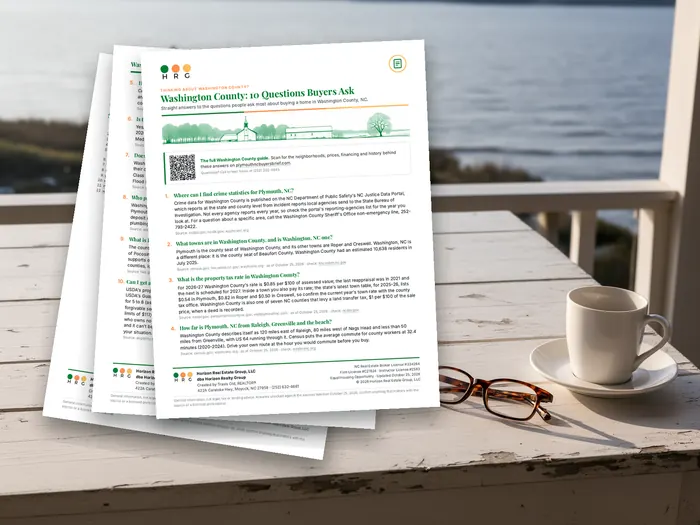
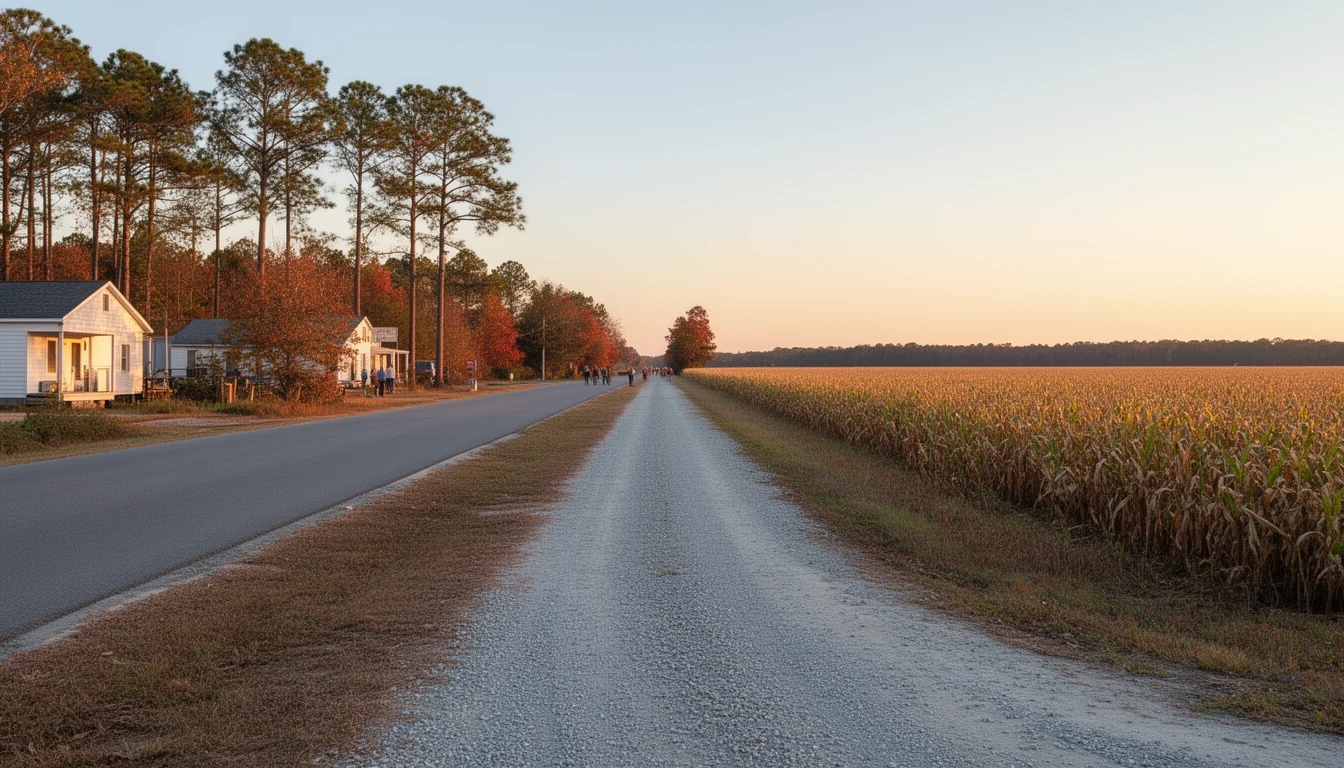
There is no sign on the road that marks Plymouth’s town line. You cross it somewhere out on US 64, past the Food Lion and the last of the in-town houses, and the pavement keeps going while the pines take over, and nothing tells you the rules just changed. But they did. A different utility owns the pipe under your yard, and a different office sends the bill.
That is the part of buying here that surprises people who grew up on city services. In most of America, you buy a house and the city handles water, sewer, and trash. In Washington County, which of those you get depends entirely on which side of an invisible line your driveway sits.
Who runs the water inside Plymouth?
The Town of Plymouth runs its own water and sewer utility. Public Works is at 206 Andrew Jackson Avenue, and utility billing runs through the same office at (252) 793-9101. If your house is inside the town limits, the town is your water department and the number you call when a main breaks at midnight.
The system is small. A 2025 review of the town’s utility rates put Plymouth at roughly 1,279 water customers and 1,284 sewer customers, split between homes and businesses. When a town has about as many sewer accounts as water accounts, that tells you something useful: the systems were built together and they serve the same streets. There is no patchwork here.
The town sets its own rate schedule and revises it from time to time, so ask for current rates when you call. What matters more than the number is the structure. Town utility bills are monthly, they stack water and sewer together, and they come whether you use much or not.
Who runs the water outside it?
Cross the line and you are on the county’s system, and it is a genuinely different animal. Washington County owns and operates a regional water system built specifically for the areas outside the town limits of Plymouth, Roper, and Creswell. It was financed with revenue bonds, construction started in August 1999, and the treatment plant went online on April 9, 2001, after hurricanes Dennis and Floyd slowed the work.
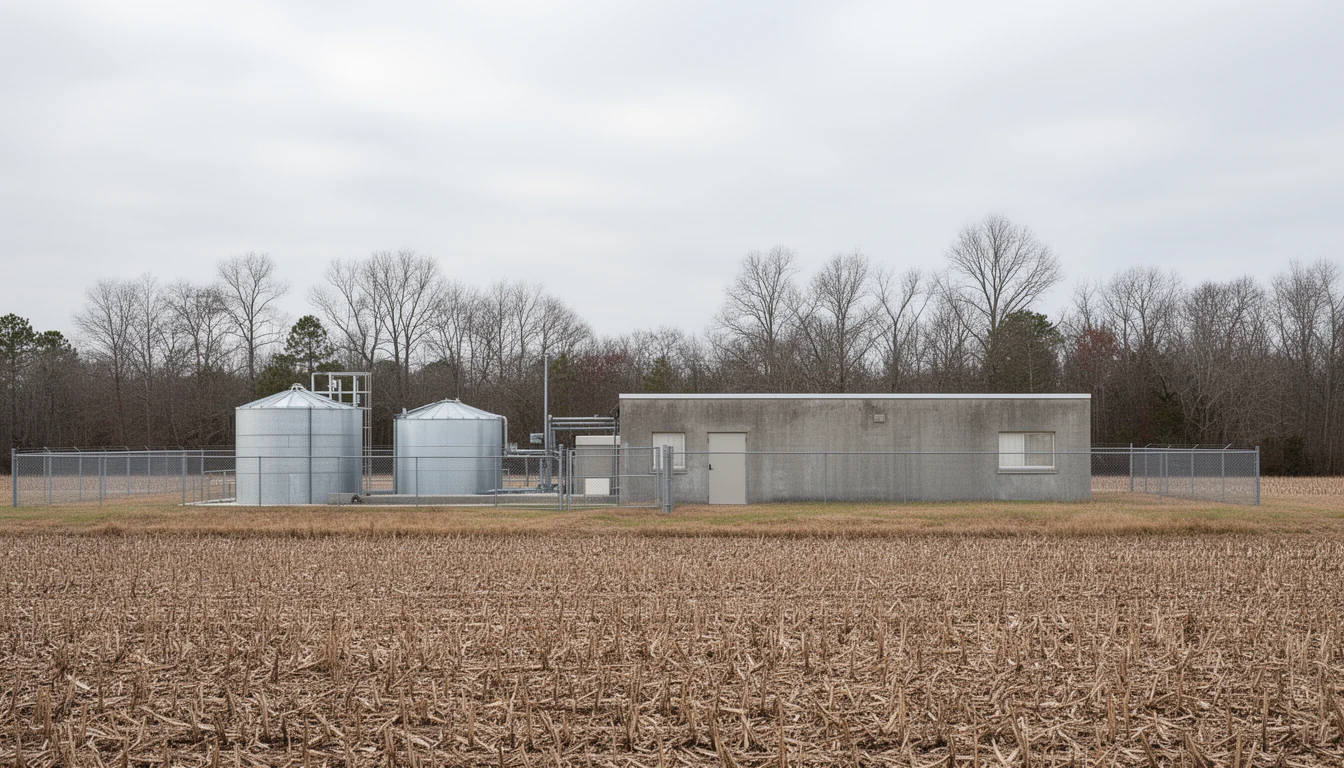
The plant sits at 396 West Mill Pond Road in Roper. It is rated at 0.750 million gallons per day and pulls from three deep wells rated at 350 gallons per minute each. Those wells tap the Castle Hayne Aquifer at an average depth of 280 feet, screened at three withdrawal zones. Treatment starts with hydrogen peroxide injected at the wellhead to knock down hydrogen sulfide bacteria, then chlorine and chloramine, with polyorthophosphate for corrosion control. Chloramine has been part of the process since 2005.
The administrative side is at 120 Adams Street in Plymouth, in the courthouse. That is where you sign a Water User Agreement.
County rates are published: a $29.00 minimum charge for the first 2,000 gallons on a standard 3/4-inch meter, then $16.00 for each additional 1,000 gallons. Those figures are set by the county and revised by the board, so confirm them before you build a budget around them.
The 30-day detail nobody mentions
Here is the practical thing that catches new construction and renovation. Getting onto the county system is not a phone call. You sign the Water User Agreement, show photo ID and proof of ownership, and the property has to be in an area where a water main is actually accessible. Then field staff place the meter, verify your shut-off valve, and call NC811 before anyone digs. The county says that process can take up to 30 days.
You also own the plumbing from the outlet side of the meter to your shut-off valve at the house. That trench and that pipe are yours to dig and pay for.
So the first due-diligence question on any county parcel is not “is there water?” It is “how far is the nearest main, and whose line is it?” A lot with the county main at the road is a straightforward tap. A lot with the main a quarter mile away is a completely different project, and the county is not required to extend to you.
Sewer is where the money hides
Inside town, you are on Plymouth’s sewer. Outside town, you are almost certainly on a septic system, and that is a permit question before it is a cost question. Private wells and on-site wastewater are permitted through the Martin-Tyrrell-Washington District Health Department, whose Washington County office is at 198 NC Hwy 45 N in Plymouth. I wrote a separate piece on wells and septic if you want the detail on testing and what a home inspector misses.
The honest framing: a parcel a few hundred feet outside the town line can carry a five-figure septic installation, plus a well if county water does not reach it. That is not a reason to avoid land out here. It is a reason to price it before you offer, because the seller already knows.
Power comes from Dominion, but confirm it at the address
Dominion Energy is the electric utility listed for Plymouth. It is the investor-owned utility that covers this stretch of the coastal plain, and it is who you will most likely be calling.
One caution: in eastern North Carolina, cooperative territory can begin a few miles from town, and the boundary does not follow anything you can see. Confirm the provider for the exact address before you assume. It takes one phone call and it settles the question.
Internet here beats the rural reputation
This is the pleasant surprise. Plymouth proper has real wired internet. Brightspeed, the successor to CenturyLink’s local network, serves the town with a mix of fiber and legacy DSL, and fiber-class speeds are available at many in-town addresses. The gaps are closing too: under North Carolina’s Completing Access to Broadband program, the state announced a 2025 grant award to Brightspeed to extend high-speed service to 1,043 homes and businesses in Washington County, which covers about 96% of the county’s remaining eligible unserved locations. RiverStreet Networks shows service in parts of the area, T-Mobile 5G home internet reaches much of the county, and Starlink works as the backstop.
If you work from home, treat broadband as a due-diligence item, not a marketing claim. Ask the provider what is live at that address today, at what speed, and get it in writing. “Service available” and “service available at your house” are different sentences.
Answer six questions before you write the offer
Four of these you can answer in an afternoon. The rest come from a phone call or two.
- Which system serves this address, town or county?
- Is there an existing water meter, or is this a new tap with a 30-day connection timeline?
- Sewer or septic, and does the health department have a current permit on file for the system?
- What did the last twelve months of utility bills actually run? Ask the seller for the statements. A year of real bills beats any estimate.
- Which broadband provider is live at the address, and at what speed?
- Who provides power at this specific address?
What this means when you build
If you are building or renovating rather than buying an existing house, the utility map becomes a construction schedule. Water main distance, meter timeline, septic permitting, and power service all sit at the front of the job, before a foundation is poured. Add one more layer if the parcel touches the river or a tributary: Washington County is one of North Carolina’s 20 CAMA counties, so bulkheads, piers, and shoreline work generally require coastal permits on top of everything else.
None of that is exotic. It is just sequencing, and sequencing is what separates a build that runs from one that stalls in month three waiting on a meter.
The line, and what it actually costs
Stand at the edge of town on US 64 with the fields opening up ahead of you and the whole distinction comes down to a billing address. Inside, you pay the town monthly and someone else owns the pump. Outside, you pay the county and you own more of your own infrastructure, including the parts that fail.
Both are workable. Both have real numbers attached, and both numbers are knowable before you sign anything. Most of the surprises I see on rural purchases were never mysteries. They were phone calls nobody made.
Reach out if you have questions. Happy reading!
Keep reading
7 Questions for Washington County Timberland Buyers
Seven questions to settle before you buy timberland in Washington County, NC: the management plan, present-use value, the cruise, the soils, and access.
Plymouth Smells Like River Mud and Blackberries
What living in Plymouth, North Carolina actually smells and sounds like: the Water Street riverfront, the 1864 battle museum, the pocosin, and the drive.
10 Questions Before Buying Riverfront on the Roanoke
Ten questions to settle before you buy Roanoke River frontage near Plymouth, NC: flood zone, elevation certificate, dock permits, septic, and insurance.