
7 Questions for Washington County Timberland Buyers

In this post
- 1. Is there a written management plan, and whose is it?
- 2. What does leaving present-use value actually cost me?
- 3. What is standing on it, and who cruised it?
- 4. What is under the pines?
- 5. Is the access legal, or just customary?
- 6. Who else has rights to the land?
- 7. Who pays to grow the next forest?
- Before you make an offer
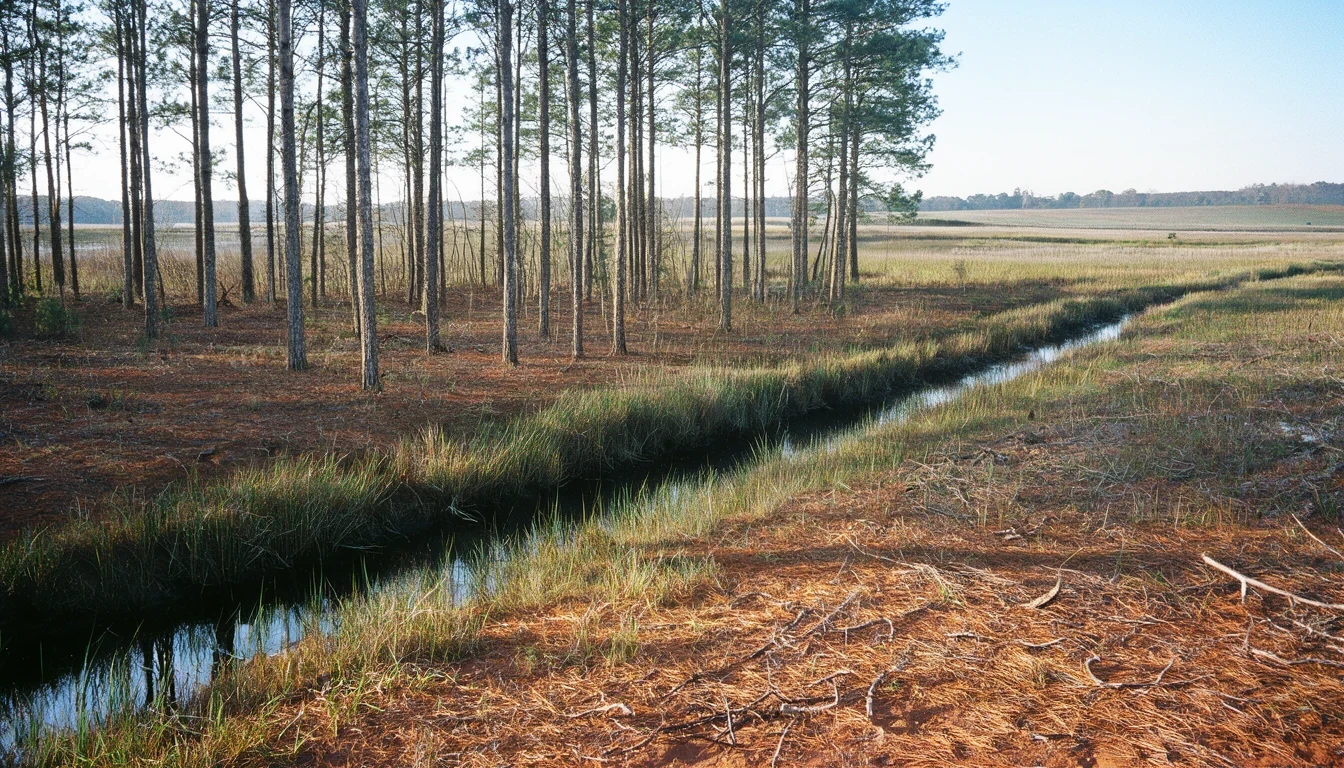
The first thing that surprises people from out of town is the quiet. Walk into a loblolly stand off the south side of Plymouth on a November morning and there is no traffic noise, no machinery, just wind moving through needles and the wet smell of pine duff under your boots. Then you notice the ditch. Every managed stand here has one, straight as a survey line, holding dark water an inch below the grass.
That ditch is your first clue that you are not buying a postcard. You are buying a business with trees on it, and the county has rules about how that business gets taxed and how it gets replanted.
Here are the seven questions I would want answered in writing before I signed anything in Washington County.
1. Is there a written management plan, and whose is it?
North Carolina does not hand out the forestry tax break for owning woods. Forestland qualifies for present-use value only as part of a forest unit actively engaged in the commercial growing of trees under a sound management program, and at least one tract in that unit has to be 20 acres or more in actual production.
So ask for the plan. Not a description of one, the document. If the seller cannot produce it, you are probably looking at unmanaged acreage that got the tax rate by inertia, and your first year as owner is when that catches up with you.
2. What does leaving present-use value actually cost me?
This is the question sellers hope you will not ask out loud, because the answer can be the largest number in the deal after the purchase price.
Applications go to the county assessor by January 31 of the year you claim the benefit. If the land later comes out of the program, the current year is taxed at market value and the deferred taxes for the three prior years come due with interest. That is the rollback, and it follows the land, not the seller’s good intentions.
Ask the assessor’s office for a rollback estimate in writing while you are still in due diligence. Then decide whether your plan for the property, a homesite, a clear cut, a division among heirs, is compatible with the tax treatment it has been getting.
3. What is standing on it, and who cruised it?
A timber cruise is an inventory: species, age, stems per acre, and an estimate of what the stand will bring in a sale. A consulting forester does it, it costs real money, and it is the difference between buying a forest and buying a rumor.
Know which product you have. Pulpwood and sawtimber are different markets at different prices, and a stand that looks thick from the cab of a truck can be almost entirely pulp.
The local market matters here more than any chart. The Domtar mill at the edge of town makes softwood fluff pulp, runs 351 employees, and holds a rated capacity of 390,000 air-dry metric tonnes a year. Softwood is what most of this county grows, and a mill that consumes pine for a living is why timberland here has a buyer at all.
4. What is under the pines?
Washington County has two kinds of ground, and they behave nothing alike.
Mineral upland drains and holds a road. The organic ground east of town, the pocosin country around Lake Phelps and Pettigrew, is peat: it holds water like a sponge, and once it dries out it can burn underground and stay burning. A stand planted on that ground after a drainage ditch was cut is a different asset than a stand on sandy loam, and it needs a different set of questions about who maintains the ditch and where the water goes when the county gets a wet winter.
Look at the soils map before you look at the trees. A wetland determination costs less than a replanting bill.
5. Is the access legal, or just customary?
Plenty of old Washington County parcels are described by metes and bounds, carried down through families, and reached by a lane that everyone has used for sixty years. Nobody ever wrote it down.
That lane is not an easement. Ask for access of record: a deeded right-of-way, or an easement that appears in the chain of title and on the survey. If the only access crosses a neighbor’s field, you want that in writing with the neighbor’s signature on it, before closing, not a verbal assurance at the kitchen table.
6. Who else has rights to the land?
A hunting lease is common and often good money. So is a timber reservation that lets a prior owner cut the pines for a set number of years, and a utility easement that cuts a swath you cannot plant.
Read the deed for reservations and the file for leases. Then call the hunt club. A club that has run dogs on the property for two decades is not automatically a problem, but you should know who is on the land in December and what they were promised.
7. Who pays to grow the next forest?
A harvest is not the end of the asset. It is the middle of it, and the bill for site prep and seedlings arrives after the check does.
The N.C. Forest Service Forest Development Program has cost-shared this work since 1977, generally covering up to 40 percent of the actual per-acre cost, and 60 percent for longleaf, hardwoods, or wetland species. It requires a forest management plan and generally tops out at 100 acres a year. Your county ranger’s office is where you sign up.
Budget the replant before you spend the harvest.
Before you make an offer
Program rules and tax rates change, and this page is a place to start a conversation, not a substitute for one. Call the Washington County assessor about present-use value and rollback. Call the N.C. Forest Service district office about the management plan and cost share. Walk the ground in January, when the water is up and the leaves are off, and you can see what the summer hid.
The pines will still be there next spring. The rollback bill shows up a lot faster than that.
Keep reading
Plymouth Utilities: Two Water Systems, One Town Line
In Plymouth, town and county water come from different systems. What changes at the town line for water, sewer, power, and internet, and what it costs.
Plymouth Smells Like River Mud and Blackberries
What living in Plymouth, North Carolina actually smells and sounds like: the Water Street riverfront, the 1864 battle museum, the pocosin, and the drive.
10 Questions Before Buying Riverfront on the Roanoke
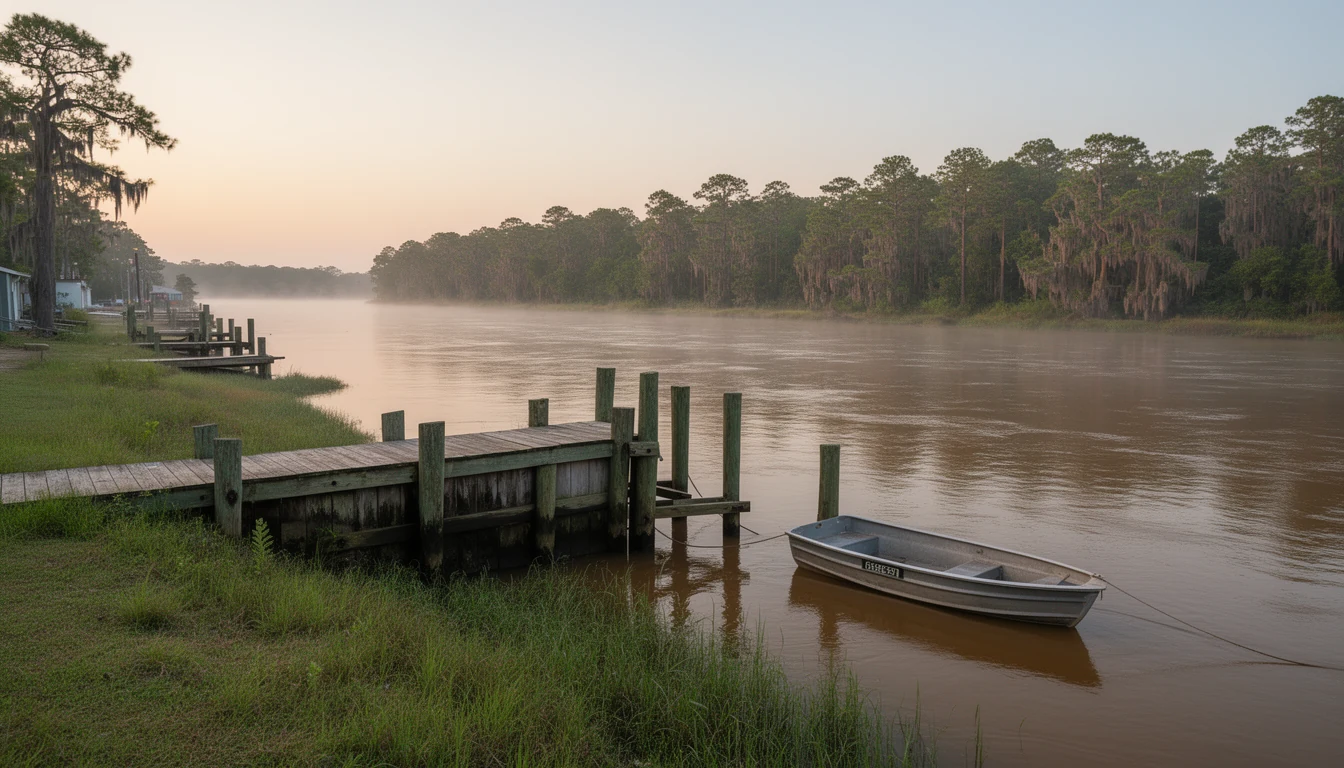
Ten questions to settle before you buy Roanoke River frontage near Plymouth, NC: flood zone, elevation certificate, dock permits, septic, and insurance.