
Battle of Plymouth 1864: The CSS Albemarle and the Roanoke


In this post
You can stand on the grass behind the Port O’ Plymouth Museum on a summer morning and watch the river do what it has always done here: slide past the town, wide and slow and brown, carrying the smell of mud and fish, and on a south wind, a hint of the mill. Moored low in the water behind the museum sits a 63-foot, three-eighths-scale working replica of the CSS Albemarle, the ironclad ram that nearly gave the Confederacy control of the Roanoke River in 1864. That is a lot of history for a town of about 3,300 people, and almost all of it is walkable.1
A river town under siege
Union forces took Plymouth early in the war and fortified it as a base on the sound. Then, in April 1864, it became the stage for one of the war’s most dramatic episodes in North Carolina. On April 17, Confederate troops under General Robert F. Hoke arrived outside the town, which was defended by a Union garrison under Brigadier General Henry W. Wessells. Sources disagree on the exact numbers, but the attackers outnumbered the defenders by a wide margin.
The fighting ran four days. Fort Williams, the largest of the earthwork forts ringing the town’s eastern side, was the last stronghold to fall. On the morning of April 20, with the ironclad’s guns joining the bombardment, Wessells surrendered his command. Historians generally describe the Battle of Plymouth as the third-largest battle fought in North Carolina, and the Confederacy’s last major victory in the state.2
The cornfield ironclad
The battle hinged on a ship built in a cornfield. Needing an answer to Union gunboats on the sounds, Confederate contractors laid down the CSS Albemarle in 1863 at Edwards Ferry on the Roanoke, upriver near Scotland Neck, on farmland owned by Peter Evans Smith. A 19-year-old named Gilbert Elliott supervised the work, and neighbors donated a sawmill and a blacksmith shop to the effort.
She was launched in the spring of 1864 and finished her armor plating while steaming downriver toward Plymouth. On April 19, the Albemarle rammed and sank the USS Southfield, damaged the USS Miami, and drove off the supporting Union gunboats. It was the ship, more than anything else, that broke the Union position.3
The night the Albemarle sank
The ironclad’s run lasted six months. On the night of October 27, 1864, a young Union lieutenant named William B. Cushing brought a small steam launch up the river in the dark, rode it over the log boom protecting the Albemarle at her Plymouth mooring under Confederate rifle fire, and detonated a spar torpedo against her hull. The ship sank at her mooring, and Union forces retook Plymouth days later. Cushing lost two men; naval historians still point to the raid as one of the most audacious small-boat actions of the war.4
What the surrender left behind
The battle’s aftermath deserves its own honest sentence. Contemporary accounts, including sworn testimony from Black soldiers in the garrison, describe Black Union soldiers and civilians killed after the surrender; estimates of the death toll vary widely by source. The state did not formally mark this history until December 13, 2024, when the North Carolina Department of Natural and Cultural Resources dedicated highway marker B-79, “Plymouth Massacre,” at U.S. 64 and Rankin Lane in Plymouth. The town’s Civil War story had been commemorated publicly since 1928; the massacre part took 160 years to get its own sign.5
Where you can still walk it
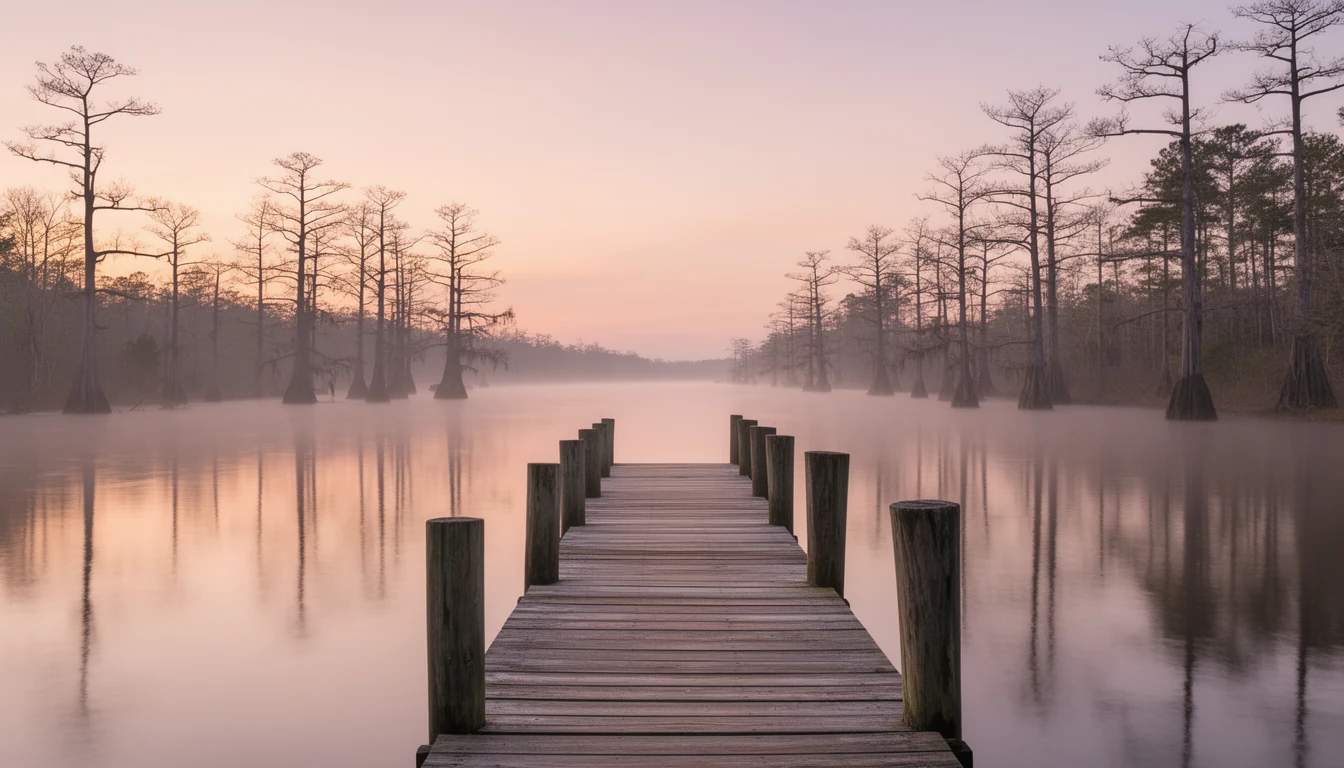
The Port O’ Plymouth Museum, housed in the town’s 1923 Atlantic Coast Line depot on Water Street, tells the whole story, and the replica ironclad sits on the river behind it. A few blocks away, a replica of the 1867 Roanoke River screwpile lighthouse, completed in 2003, marks the rebuilt waterfront. The 1787 street grid and the National Register historic district, listed in 1991, cover the same ground where the fighting happened.6
The Bottom Line
You do not buy in Plymouth because of the Civil War. The history is a reason to visit, to walk, and to understand what you are buying into, but this is still a small, thin-market county seat in a Tier 1 county, with the mill, the services gap, and the flood zones that come with it. What the history does give a buyer is context: the street grid, the older housing stock, and the waterfront all exist because of what happened on this river. A buyer who walks the museum and the riverfront before writing an offer understands the town better than one who only reads a listing. Start with the full history page, then come see it in person.
Footnotes
-
Port O’ Plymouth Museum: portoplymouthmuseum.org/about-port-o-plymouth-museum ↩
-
NCpedia, “Plymouth, Battle of”: ncpedia.org/plymouth-battle; NC Department of Natural and Cultural Resources ↩
-
NC Department of Natural and Cultural Resources, “The Ironclad Albemarle and the Battle of Plymouth”: dncr.nc.gov/blog/2016/10/27/ironclad-albemarle-and-battle-plymouth ↩
-
Naval History and Heritage Command, “Cushing, William Barker: The Attack on CSS Albemarle, 27-28 October 1864”: history.navy.mil ↩
-
NC Department of Natural and Cultural Resources, “Plymouth Massacre (B-79)”: dncr.nc.gov/blog/2024/12/03/plymouth-massacre-b-79 ↩
-
Plymouth Historic District, National Register of Historic Places nomination (listed 1991) ↩
Keep reading
10 Questions Before Buying Riverfront on the Roanoke
Ten questions to settle before you buy Roanoke River frontage near Plymouth, NC: flood zone, elevation certificate, dock permits, septic, and insurance.
Washington County's Seat: Why Plymouth, Not Roper
How Washington County, NC got its shape: the 1799 split from Tyrrell, the county seat's move off Lee's Mill, and what the lines mean for buyers today.
7 Drive-Time Checks Before Buying in Plymouth, NC
Seven drives that decide what living in Plymouth costs you in road time, with every mile and minute routed on real roads in Washington County.