
Washington County Contracts: The Cost of Backing Out

In this post
In June 2022 the North Carolina Supreme Court held in Reynolds-Douglass v. Terhark that an Offer to Purchase and Contract is an evidence of indebtedness under N.C.G.S. § 6-21.2. The decision makes the contract’s attorney’s fee clause enforceable: a seller who prevails in a suit to recover the earnest money deposit can recover reasonable attorney’s fees.
What happened in Reynolds-Douglass v. Terhark?
The case started with a $250,000 contract in Wake County. The buyer signed the standard Offer to Purchase and Contract, agreeing to a $2,000 due diligence fee and a $2,500 additional earnest money deposit. Three days later she demanded a $5,500 price cut, never paid either fee, and the deal collapsed. The seller sued, won the due diligence fee in small claims, then amended to add the earnest money deposit and attorney’s fees. The trial court awarded $18,343.92 total, including $13,067.70 in attorney’s fees. The buyer appealed all the way to the state Supreme Court.
Why did the court call the contract an evidence of indebtedness?
North Carolina’s general rule is that each side pays its own attorney’s fees unless a statute says otherwise. N.C.G.S. § 6-21.2 creates an exception for notes, conditional sale contracts, and other evidence of indebtedness. The buyer argued a real estate purchase contract is not that kind of instrument. The Supreme Court disagreed, holding that an Offer to Purchase and Contract is a written instrument, signed by the parties, that on its face evidences a legally enforceable obligation to pay money. That is the test the Court set in a 1980 case, Stillwell Enterprises v. Interstate Equipment, and it applies here. The Court also confirmed the prevailing party can collect attorney’s fees for defending the judgment on appeal.
What did the dissent argue?
Two justices dissented. They argued the statute’s fee formula would cap attorney’s fees at 15 percent of the outstanding balance, which here would mean 15 percent of the $2,500 earnest money deposit, or $375, not the full $13,067.70 awarded. They also argued the statute was written for commercial transactions, not residential sales contracts. The majority rejected both points: nothing in the statute limits it to commercial deals, and the contract’s own language authorized reasonable attorney’s fees for the prevailing party.
How does this play out in Washington County?
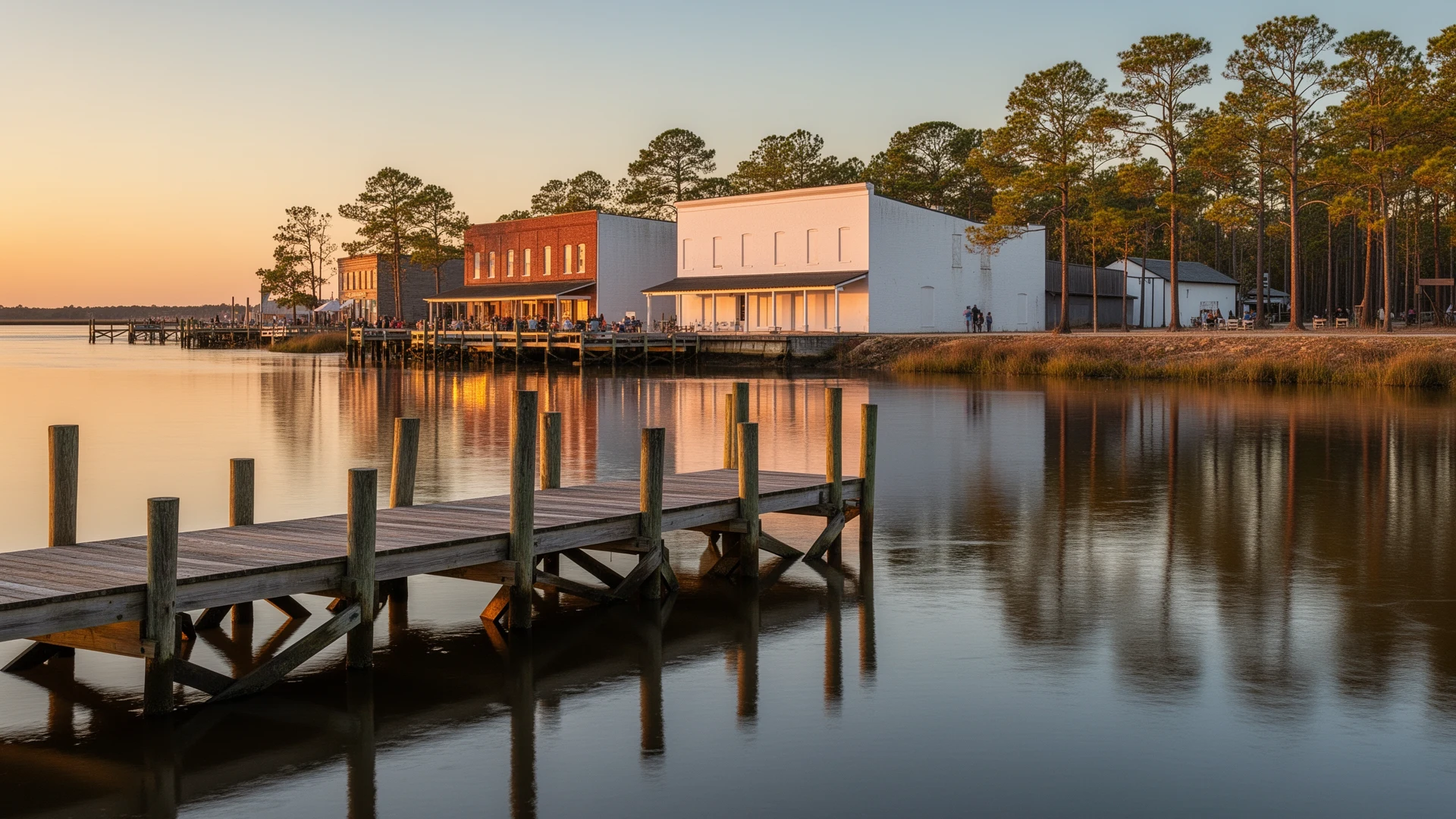
Washington County is a thin-market, deeply rural county where most transactions are waterfront on the Roanoke River or Lake Phelps, farm and forestry land, or homes in Plymouth, Roper, and Creswell. Plymouth is a 1787 port town with a National Register historic district, and the county is Tier 1, the most economically distressed tier in the state, which makes the honest value framing of the market important. The Domtar mill has anchored the economy on the same site since 1937, and buyers weigh that reality alongside the riverfront appeal.
Where do Washington County closings actually happen?
Washington County has a recording rule that shapes every closing. Before any deed can be recorded, the GIS office must assign it a parcel ID, and the deed must carry either a Tax Collector certification that no delinquent taxes are due or a closing attorney statement that delinquent taxes will be paid from closing proceeds. That makes the closing attorney’s certification a live, county-specific contract issue. Taxes are due September 1 and delinquent January 6, with interest added from January. NCDOR’s official table lists the county rate at $0.85 per $100 of valuation, with the latest revaluation in 2021 and the next in 2029.
A local example: Plymouth
A buyer signs a contract on a riverfront house in Plymouth, pays a $1,500 due diligence fee and a $2,500 earnest money deposit, then discovers during diligence that the flood insurance requirement makes the monthly cost unworkable. The buyer walks after the diligence period. The seller keeps the fee and the deposit, and under the 2022 ruling can recover reasonable attorney’s fees if the deposit has to be collected by suit. The flood zone check that should have come first becomes the most expensive part of the deal.
The bottom line
Read the contract before you sign it, and know which fees are at risk if the deal falls through. The due diligence period is the time to do your inspections, your financing work, and your second-guessing. Once you let it expire and the contract is firm, walking away can cost you the deposit, the fees, and the other side’s legal bill on top.
If you are in a dispute over a contract, a North Carolina real estate attorney is the right person to talk to. This article explains what the court decided, not what any particular contract says, and every contract should be reviewed by a lawyer before you sign it.
Keep reading
10 Questions Before Buying Riverfront on the Roanoke
Ten questions to settle before you buy Roanoke River frontage near Plymouth, NC: flood zone, elevation certificate, dock permits, septic, and insurance.
Washington County's Seat: Why Plymouth, Not Roper
How Washington County, NC got its shape: the 1799 split from Tyrrell, the county seat's move off Lee's Mill, and what the lines mean for buyers today.
7 Drive-Time Checks Before Buying in Plymouth, NC
Seven drives that decide what living in Plymouth costs you in road time, with every mile and minute routed on real roads in Washington County.